
Share Geung Goo Michael Lee's obituary with others.
Invite friends and family to read the obituary and add memories.
Stay updated
We'll notify you when service details or new memories are added.
You're now following this obituary
We'll email you when there are updates.
Select your format and elements to print

IN LOVING MEMORY OF Geung Goo Michael Lee
Geung Goo
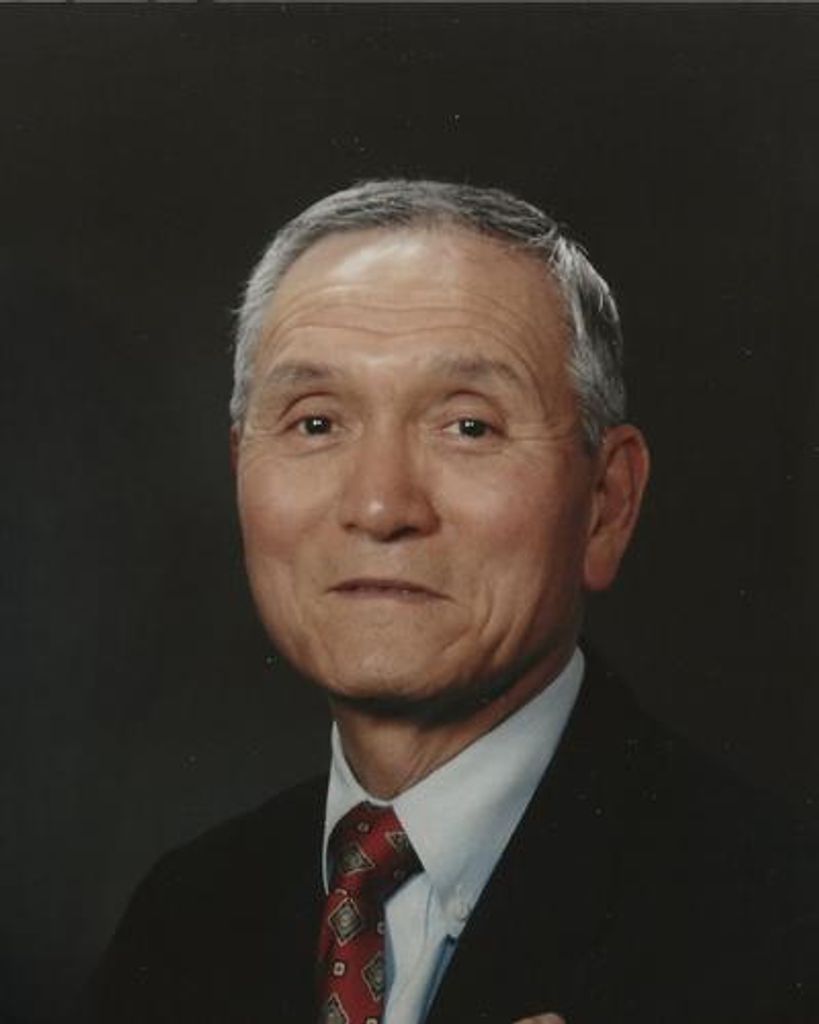
Michael Lee
Dec 20, 1939 — Jul 17, 2024
Geung Goo Michael Lee's Obituary
Geung Goo Lee, who was born in rural Korea and became a prominent and successful businessman, entrepreneur, father and grandfather, and leader of Chicago's Korean American community, died on Wednesday, July 17th, 2024, after suffering a heart attack, in Holland, Michigan. He was 84.
For over 30 years, until 2006, Mr. Lee owned and operated Lee's Auto Service, a Mobil franchise and mechanic shop on the southeast corner of Madison Street and Des Plaines Avenue in Forest Park, Illinois. He and his wife, the former Seung Ja Oh, a registered nurse, raised four daughters in the large brick corner house in Forest Park that they bought in 1983. Over the years, they also owned and operated numerous other businesses in the Chicago area, including a beauty supply shop in the old Maxwell Street market area on the near west side of Chicago, a coin laundry, a wig shop, and a liquor store. They also bought and sold multiple apartment buildings in Forest Park.
Mr. Lee, who stood a modest 5'4" and weighed 145 pounds, was a towering figure in the Chicago Korean American community. An early Korean immigrant to Chicago after the 1965 elimination of quotas on Asian immigration to the United States, he sponsored numerous relatives and others to immigrate to the United States. He was an altar server and leader in his church, the Chicago Korean Martyrs Catholic Church in Old Irving Park, and was an officer in numerous Korean American social and fraternal organizations. Most significantly, he was known, admired and respected throughout Chicago's Korean American community for his hard work, success, honesty, generosity, and kindness.
His last day was a joyful one; Mr. Lee, an accomplished golfer, played eighteen holes of golf in the morning, spent time with his grandchildren, and did yard work at his daughter Linda's Michigan home – three of his favorite activities.
Geung Goo Lee (he later took the English name Michael) was born on December 20, 1939 in Hansan, Choong Nam province in Japanese-occupied Korea. Mr. Lee's father and mother, Yong Kyu Lee and Soo Bae Park, like most of their neighbors, were rice farmers.
Mr. Lee, along with his brother, served in the South Korean army and lived during the 1950-53 war between communist North Korea and democratic South Korea that ravaged the Korean peninsula with violence, death and deprivation. In later years, Mr. Lee never talked about the war.
In 1963, West Germany began to invite Korean guest workers to work as miners. Koreans living through the postwar deprivation saw a glimmer of hope in this European work opportunity, and Mr. Lee emigrated to become one of these guest workers, or Gastarbeiter, and mined coal in West Germany. In 1969, after the 1965 Immigration and Naturalization Act revoked the American immigration quota system, Mr. Lee immigrated to the United States. He worked as a welder in Chicago and attended mechanic school. He had earlier completed high school in Korea.
In Chicago, Mr. Lee roomed with another Korean immigrant in an apartment in the Lincoln Park neighborhood of the late 1960's and early 1970's. Their lives consisted of little more than their manual labor jobs and job training programs. One of their few pleasures was a neighborhood pizzeria. Mr. Lee, a man of few words in any language whose comfort with English was limited throughout his life, knew only how to order the pizzeria's special, the "Super Pizza." For the rest of his life, whenever contemplating a treat for his daughters or grandchildren, Mr. Lee would suggest "Super Pizza"?
In 1970 he met Seung Ja Oh, a fellow Korean immigrant and Gastsarbeiter nurse from a neighboring province, at Niagara Falls, New York. While he was attracted to her, there was a problem: Seung Ja was a Roman Catholic, while Mr. Lee had been raised a Baptist. Mr. Lee's love for Seung Ja proved to be so great that it overcame this apparent obstacle; he converted to Catholicism. Seung Ja was to become his wife and partner for 54 years.
They were married in August, 1970 at St. Clement Church on west Deming Place in Chicago. There was no time for a honeymoon; Mr. Lee had to return to his welding job and mechanics school the next day. The stress of the day-and-night schedule of work and school caused him to break out in hives.
In 1973, Mrs. Lee gave birth to their first daughter, Anna Miran. She was followed by Linda Miyoung in 1975, Viola Misun in 1976, and Michelle Mihwa in 1979. From about middle school age, each daughter worked at Lee's Auto Service or in the Lees' various other businesses. The strong traditional Korean preference for male children caused some acquaintances to make insensitive remarks, but Mr. Lee, counterculturally, was proud of his daughters and loved them all unconditionally without regret.
In 1973, after working as a mechanic in others' gas stations, he opened Lee's Auto Service, which he owned and operated for 33 years until he retired in 2006. For most of those years he kept to a strict routine: He rose at 5am to open the station. Fourteen hours later, at 7pm, he would close the station, deposit his day's proceeds at Forest Park Bank, go home for dinner with his family, and then go to the driving range. Sometimes, if his brother-in-law was working, he would sneak out during the day to play a quick nine holes of golf at Columbus Park in Chicago's Austin neighborhood before returning to the gas station.
As a businessman, Mr. Lee was scrupulously honest, diligent and fair. He refused to allow his daughters to sell Girl Scout Cookies at Lee's Auto Service because it would violate his franchise agreement with the Mobil Corporation that prohibited side businesses on the property. He would fix flat tires for free, and occasionally would not charge customers without money for "just a gallon" of gas on the promise (which he knew was likely false) that they would soon return with payment. He kept the gas station tidy and free of debris, kept pots of fresh flowers by the pumps, and kept detailed business records in an old-fashioned, handwritten ledger book in his careful, practiced script. He worked under cars and under their hoods alongside his mechanics, and his hands, already worn through years of farm work, coal mining, and welding, became heavily calloused, cracked, and darkened.
Mr. Lee's impressive accomplishments, diligent work ethic, and quiet demeanor could present a formidable exterior for those who encountered him, perhaps in particular for his daughters and their boyfriends. But as his business accomplishments and family grew, Mr. Lee's revered reputation within the Chicago Korean American community grew likewise. In some ways he lived in two opposite, parallel worlds: Non-Korean customers at Lee's Auto Service saw a taciturn immigrant service worker with dirty hands who spoke broken English, while his fellow Koreans in the many fraternal and social organizations he joined and led saw a successful businessman and father whose quiet generosity and diligent work ethic they admired and respected.
Sometimes, these worlds would collide. For one thing, Mr. Lee was not immunized from the anti-Asian racism that afflicts American society. Additionally, non-Korean waitresses, valet parkers, or golf course workers might overlook or take for granted the short quiet Asian man, only to be surprised by his generous tips and unfailing kindness. And Mr. Lee's daughters sometimes cringed when he would pick them up from their mostly-white Catholic grade school in his Lee's Auto Service tow truck and stained mechanics uniform. Throughout, however, Mr. Lee carried himself with unimpeachable integrity and dignity.
When his eldest daughter Anna was to be married in 1999, Mr. Lee and his wife envisioned the wedding as a culmination of all their efforts and struggles, a celebration of their successful life in the United States. Mr. Lee invited 400 of his friends, booked a hall familiar to Koreans, and made elaborate plans. One thing gave Mr. Lee pause: ashamed of his worn, darkened mechanics' hands, he asked Anna if he could wear white gloves to the ceremony. Anna assured him that not only were his hands not shameful, they proudly reflected the very work and struggles that the wedding would celebrate. Mr. Lee relented and eschewed the gloves, and his daughters never heard him speak shamefully about his hands again.
Perhaps because of his own background in rural Korea and as an immigrant to the United States, Mr. Lee was particular aware of, and generous to, many people who others seemingly overlooked or forgot. When hiring workers for Lee's Auto Service, he often chose those facing challenges and willing to work hard. He would occasionally stop his car to give money to people experiencing homelessness. For many years, he and his daughters served Christmas dinner to guests at the Lincoln Park Community Shelter – located in the same neighborhood where Mr. Lee had lived in poverty as a newly-arrived immigrant many years earlier. Mr. Lee took pride in presenting each guest at the shelter with his or her own lottery ticket.
Mr. Lee was also abundantly generous to his grandchildren, who would look forward to his rides home from school, which invariably detoured to McDonald's. Later, when his grandchildren were older and would introduce a boyfriend or girlfriend to Mr. Lee, he would slip the surprised visitor $50 or $100 on the sly.
Mr. Lee's pride extended to the large brick converted two-flat in which he and his family lived. He maintained it impeccably, trimming the many hedges that ringed his corner lot, scaling trees to trim them – even into his 80s – fixing broken fence posts, and watering, mowing, and edging his perfect lawn.
In 1979, right before his youngest daughter Michelle was born, Mr. Lee took up golf, a sport with which he had no prior experience. He was a quick study, and within a few years golf trophies began to accumulate in his basement, eventually filling every available shelf space and spilling onto the floor and into his upstairs cabinets. He played quickly, with an efficient, compact swing that launched booming drives, despite his short stature. Mr. Lee made two holes-in-one in his career and maintained a 6-handicap into his 60s. In 2022, at the age of 82, he shot below his age to win the Korean Martyrs Catholic Church tournament with an 81. On June 30th, 2024, a few weeks before his death, he won Closest to The Pin in the senior category of the same tournament.
Mr. Lee was much beloved by the staff and his fellow golfers at Columbus Park, where he played virtually every day for the last 40 years of his life. When he knew he would not be able to play on a particular day, he would play 27 or 36 holes the previous day.
When Lee's Auto Service opened, a hands-on, personable, neighborhood mechanic shop was commonplace and typical; in the increasingly corporate and impersonal business era when it closed, it was a rare and cherished gem. When Mr. Lee retired in 2006, the Mobil Corporation could find no one else willing to operate a mechanic shop at the location, and ceded the corner to the neighboring McDonald's, who built an expanded restaurant and drive-through in the location.
His daughters worried that Mr. Lee, who had worked so hard for so long and had such a practiced routine, would become aimless or depressed in retirement. Instead, he exulted in it, playing more golf than ever and, after the first of his grandchildren Eun Hae Lillig was born in 2003, rejoicing in each of them. Upon receiving word of Eun Hae's birth, Mr. Lee put on a suit and tie before going to the hospital to meet her. He and Mrs. Lee acquired nine grandchildren within twelve years, and the arrival of each one of them swelled Mr. Lee with pride. He and Mrs. Lee traveled to Africa, Central America, Europe, and within the United States, visiting the Grand Canyon, California, and, multiple times, Niagara Falls, where they had first met as young immigrants many years before.
Mr. Lee had become a United States Citizen in 1977, and was committed to the responsibilities of citizenship and the promise of opportunity for all Americans. Mr. Lee recognized that citizenship carried with it the responsibility to be informed. He loved reading and would read multiple newspapers every day to keep abreast of events, both locally and throughout the world. He diligently voted in every primary and general election, and in 2020, in the wake of George Floyd's death at the hands of the Minneapolis police, he posted a Black Lives Matter sign on his front lawn.
Despite being – or perhaps because he was -- a convert to Catholicism, Mr. Lee was especially devout. He would often remind his family that "Everything is, 'Thank You, God.'" While his comfort with the English language remained limited, for several years in his retirement he spent solitary mornings practicing The Lord's Prayer, and took pride in reciting it in English for the rest of his life. He was Godfather to numerous Godchildren baptized in the Catholic church.
Mr. Lee was preceded in death by his parents, Yong Kyu Lee and Soo Bae Park, of Hansan, Choong Nam Province, South Korea, his sisters Geum Yae Lee and Yong Sook Lee, both of South Korea, his brother Hang Koo Lee, of Forest Park, Illinois, and his grandson, Marlowe Greenwood.
He is survived by his wife, the former Seung Ja Oh, his sisters Choon Hyung Huh of Elmhurst, Illinois and Jung Sook Lee, of South Korea, his daughters Anna Miran Lee (John Lillig), Linda Miyoung Lee (Jared Kalina), Viola Misun Lee (Conor Klaus) and Michelle Mihwa Lee (Zachary Greenwood), his grandchildren Eun Hae and Tae Won Lillig, Isabella, Samuel and Noa Kalina, Phillip and Willa Klaus, and Arrow and Echo Greenwood, and numerous relatives, Godchildren and friends. He loved his nine grandchildren, in each of whom he saw a validation of all his efforts – across continents, across years, and across difficult times -- to build a life for himself and for his family.
His loss is devastating, and his wife, daughters, grandchildren, family and friends are heartbroken.
While he did not often acknowledge it, Mr. Lee was well aware of the epic scope that his life had traveled. In 2002, he returned for a visit to his modest birthplace, a traditional Korean house with a clay tile roof on a narrow dirt lane in Hansan, Choong Nam province. On his return, Mr. Lee was greeted warmly by his extended family members still living in Korea, including his relatives who now lived in the house. After everyone had bowed to each other and sat down on the floor for a traditional Korean meal, the room quieted for a moment. Mr. Lee turned to one of his American sons-in-law, who was visiting Korea for the first time, and said simply, "I born here."
A wake for Mr. Lee will be held at Nelson Funeral Home, 820 W. Talcott Road, Park Ridge, Illinois 60068, from 3-9 p.m. on Monday, July 22, 2024, with a Catholic prayer service at 6:30 p.m. Mr. Lee's funeral will be at 10 a.m. on Tuesday, July 23, 2024, at Chicago Korean Martyrs Catholic Church, 4115 N. Kedvale, Chicago, Illinois 60641. The interment will be at All Saints Catholic Cemetery, 700 N. River Road, Des Plaines, Illinois 60016.
In lieu of flowers, donations in memory of Mr. Lee may be made to the Hana Center, 4300 N California Avenue, Chicago, Illinois 60618 (https://hanacenter.org/donate) or to the Chicago Parks Foundation, PO Box 14147, Chicago Illinois 60614 (https://interland3.donorperfect.net/weblink/weblink.aspx?name=E190660&id=6)
Funeral Services for Geung Goo Michael Lee
Visitation

Monday
Nelson Funeral Home
3:00 - 9:00 pm
Prayer Service
Monday
Nelson Funeral Home
Starts at 6:30 pm
Mass
Tuesday
Korean Martyrs Catholic Church
Starts at 10:00 am
Geung Goo Michael Lee's Guestbook
Visits: 68
This site is protected by reCAPTCHA and the
Google Privacy Policy and Terms of Service apply.
Service map data © OpenStreetMap contributors